World Glaucoma Week
This article provides a deep dive into World Glaucoma Week 2026, covering the clinical background, current global initiatives, and actionable steps for prevention.
World Glaucoma Week 2026: Uniting for a Glaucoma-Free World
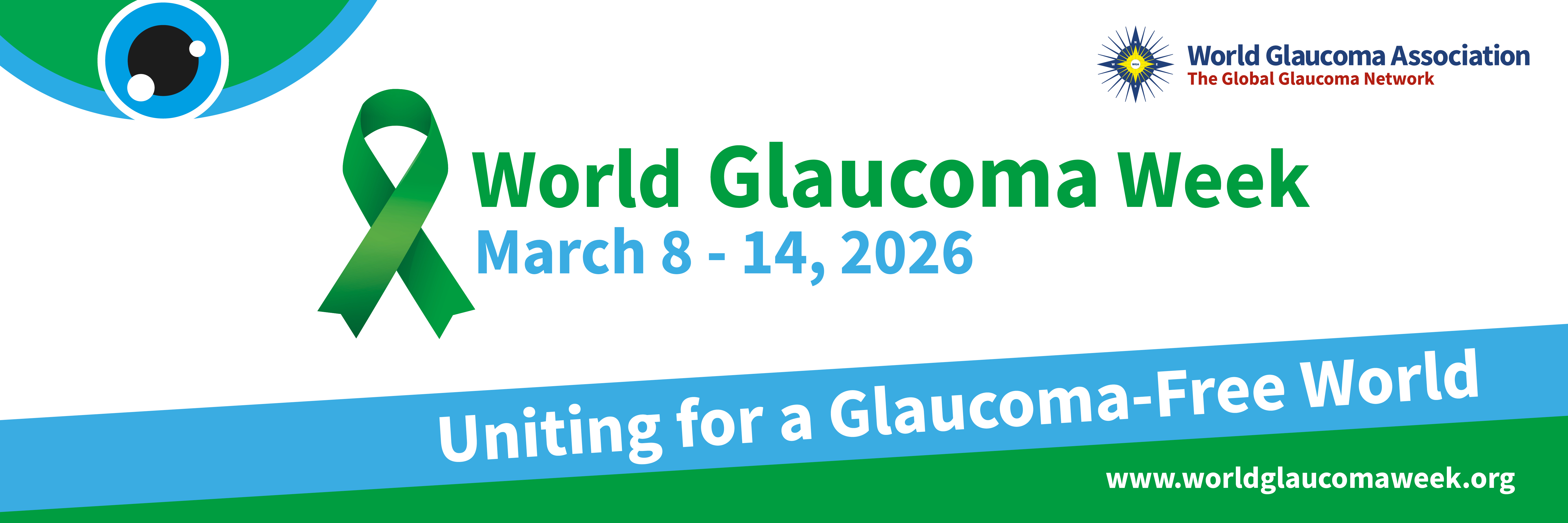
World Glaucoma Week is a global collaborative project between the World Glaucoma Association (WGA) and the World Glaucoma Patient Association (WGPA). In 2026, the week is observed from March 8th to March 14th, with World Glaucoma Day falling on Thursday, March 12th.The 2026 theme, "Uniting for a Glaucoma-Free World," highlights the necessity of global solidarity to eliminate preventable blindness through early diagnosis and sustained education.
The "Silent Thief": Why Awareness Matters.
Glaucoma is often called the "silent thief of sight" because, in its most common forms, it presents no pain and no symptoms until significant permanent damage has occurred. Irreversibility: Unlike many other eye conditions, the vision lost to glaucoma cannot be recovered. The Global Gap: Experts estimate that 50% of people with glaucoma in developed nations are unaware they have it; in developing regions, this number can exceed 90%.A Growing Epidemic: With an aging global population, the number of people living with glaucoma is projected to hit 111 million by 2040.
Understanding the Pathology.
Glaucoma is a group of diseases characterized by progressive damage to the optic nerve. Most cases involve an imbalance in the production and drainage of aqueous humor (the fluid inside the eye). When this fluid cannot drain properly, Intraocular Pressure (IOP) rises, compressing and damaging the nerve fibers.
Key Variants in 2026
Primary Open-Angle Glaucoma (POAG): The drainage angle remains open, but the "drain" (trabecular meshwork) becomes clogged over time. Angle-Closure Glaucoma: A more acute form where the iris physically blocks the drainage angle, leading to a sudden, painful spike in pressure. Normal-Tension Glaucoma: Nerve damage occurs even when eye pressure is within the statistically "normal" range.
High-Risk Profiles
While anyone can develop the disease, the 2026 campaign specifically targets those in high-risk categories for annual screening: Family History: If a first-degree relative has glaucoma, your risk is 10 times higher. Age: Risk increases sharply after age 40, and even more so after 60.Ethnicity: Individuals of African, Hispanic, or Asian descent have significantly higher prevalence rates for different types of glaucoma. Medical Comorbidities: Diabetes, high blood pressure, and extreme nearsightedness (myopia) are strongly linked to the disease.
Modern Diagnostics & Treatment
A standard vision screening for glasses is not a glaucoma test. A comprehensive exam for 2026 includes: Tonometry: Measuring eye pressure. Pachymetry: Measuring corneal thickness (which affects pressure readings). Gonioscopy: Inspecting the drainage angle. Visual Field Test: Checking for peripheral vision loss. OCT (Optical Coherence Tomography): A high-tech "CT scan" for the eye that maps the optic nerve in 3D.
Treatment Evolution
Treatment in 2026 focuses on lowering IOP through medication (eye drops), laser therapy (SLT), or MIGS (Minimally Invasive Glaucoma Surgery). These interventions do not "fix" the nerve but prevent further damage.
How to Participate in 2026 world glaucoma week!
Light Up in Green: Many hospitals and landmarks will be illuminated in green (the official color of glaucoma awareness) throughout the week. The "Family Talk": Use this week to ask your relatives about their eye health history. Community Screenings: Look for free or discounted screening events hosted by local ophthalmology clinics during the week of March 8–14.
